Oto Matsuri
I've been living in Shingu, a small coastal city in Japan's Wakayama Prefecture. On a cold Tuesday night this February, the city was alight for one of the biggest festivals of the year: Oto Matsuri, its ancient fire festival. This year, I joined as one of the noboriko, the "men who go up," who climb up to and back down from Kamikura-jinja, a mountain-top Shinto shrine.
You can find a two minute video of the festival from a few years ago here.
Giuliana's coworker Sawahara-san is my mentor for the occasion. We meet up with his group in the afternoon at a house near the Kumanogawa River, where we eat a traditional lunch of white foods, such plain rice balls and a tofu hotpot. Local sakes and Asahi beer are in abundance as we try to warm ourselves up for the cold night ahead.
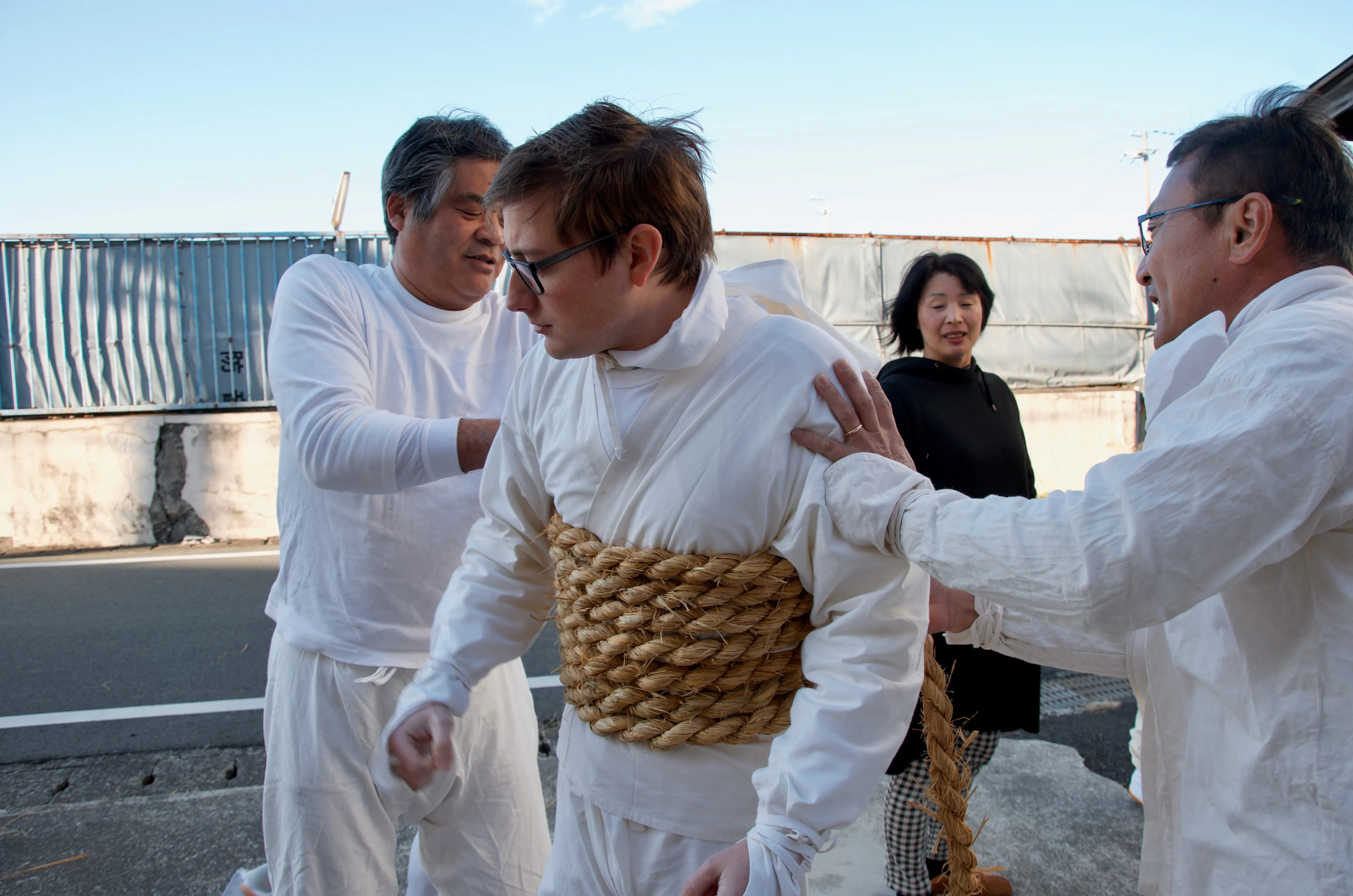
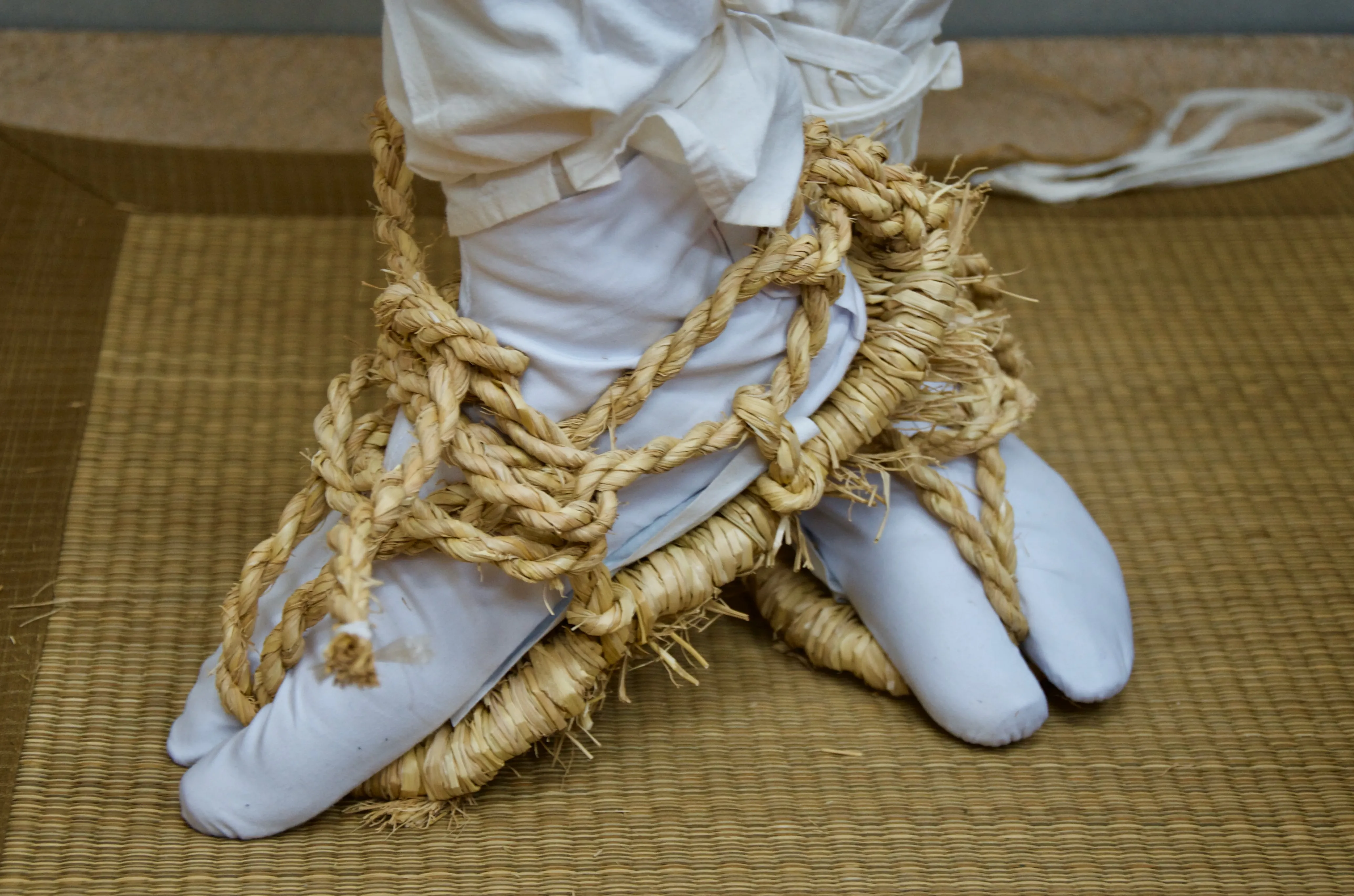
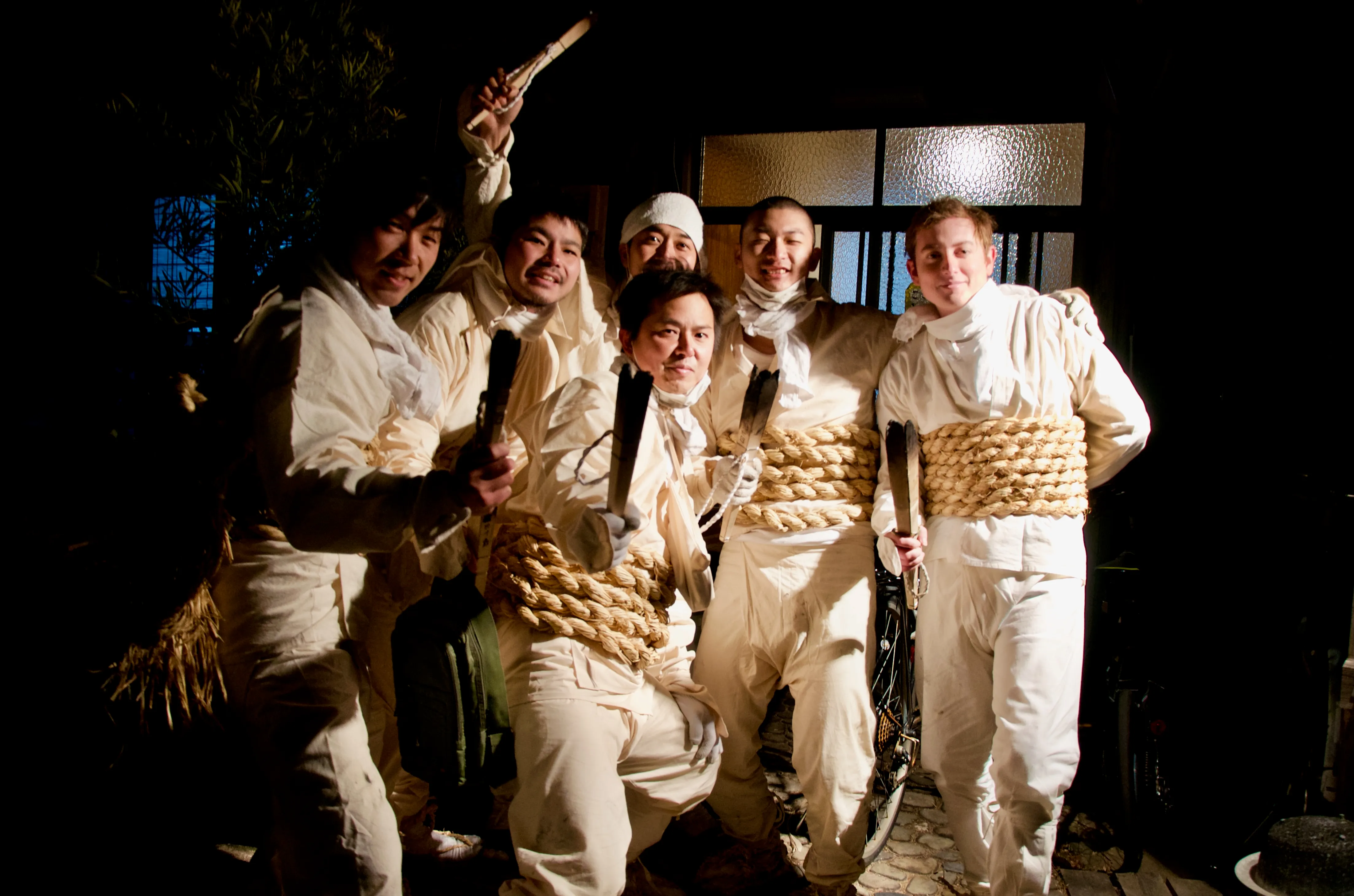
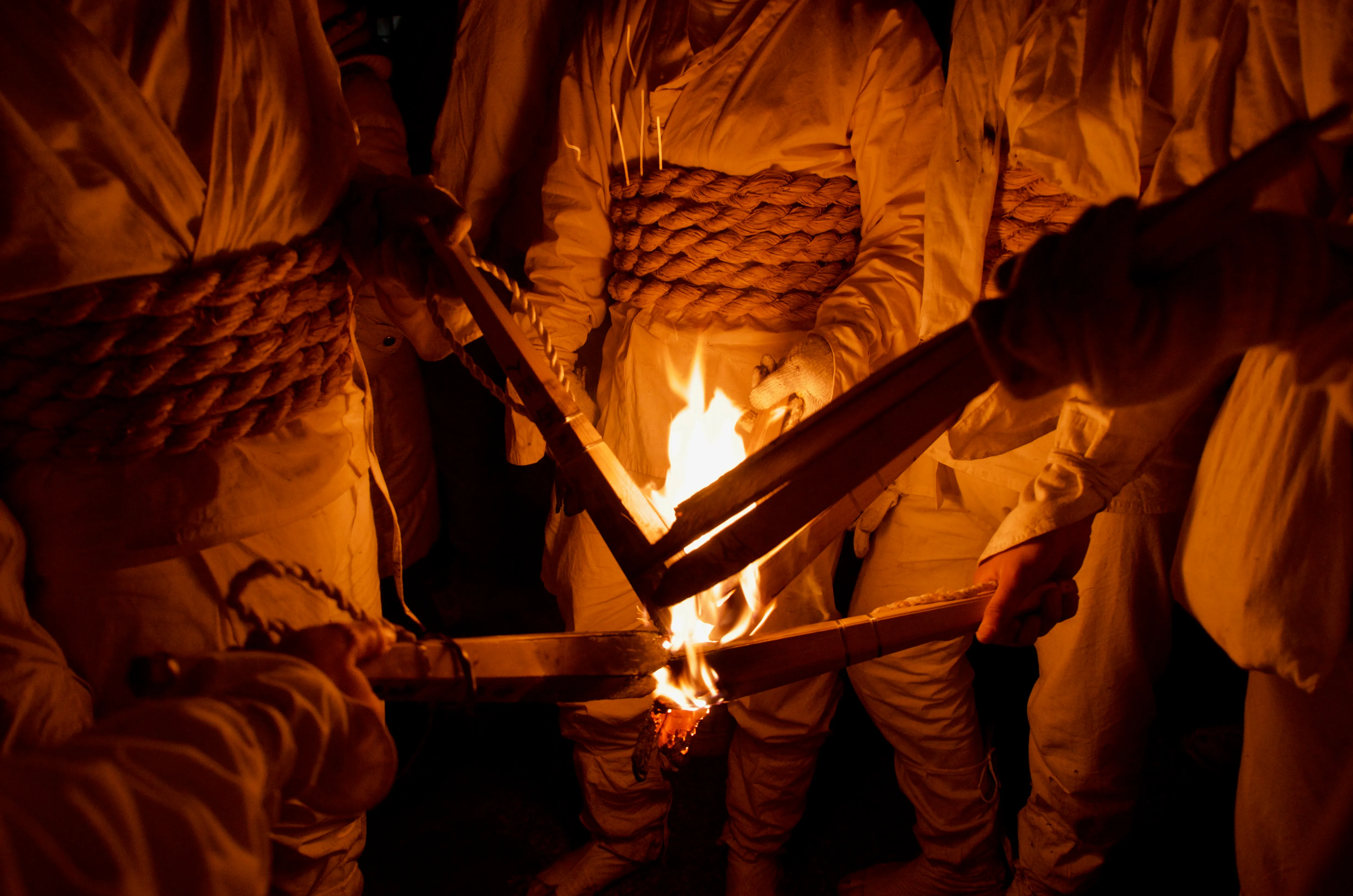
During lunch, I'm helped into the traditional white shiroshozoku costume, including V-shaped tabi socks and a haori jacket tied closed with thick rope (aranawa) around my waist. There is some symbolism behind the number of loops—three or fewer means you are angling for a fight. I had seven, which probably means "I'm a wimp, please don't hurt me."
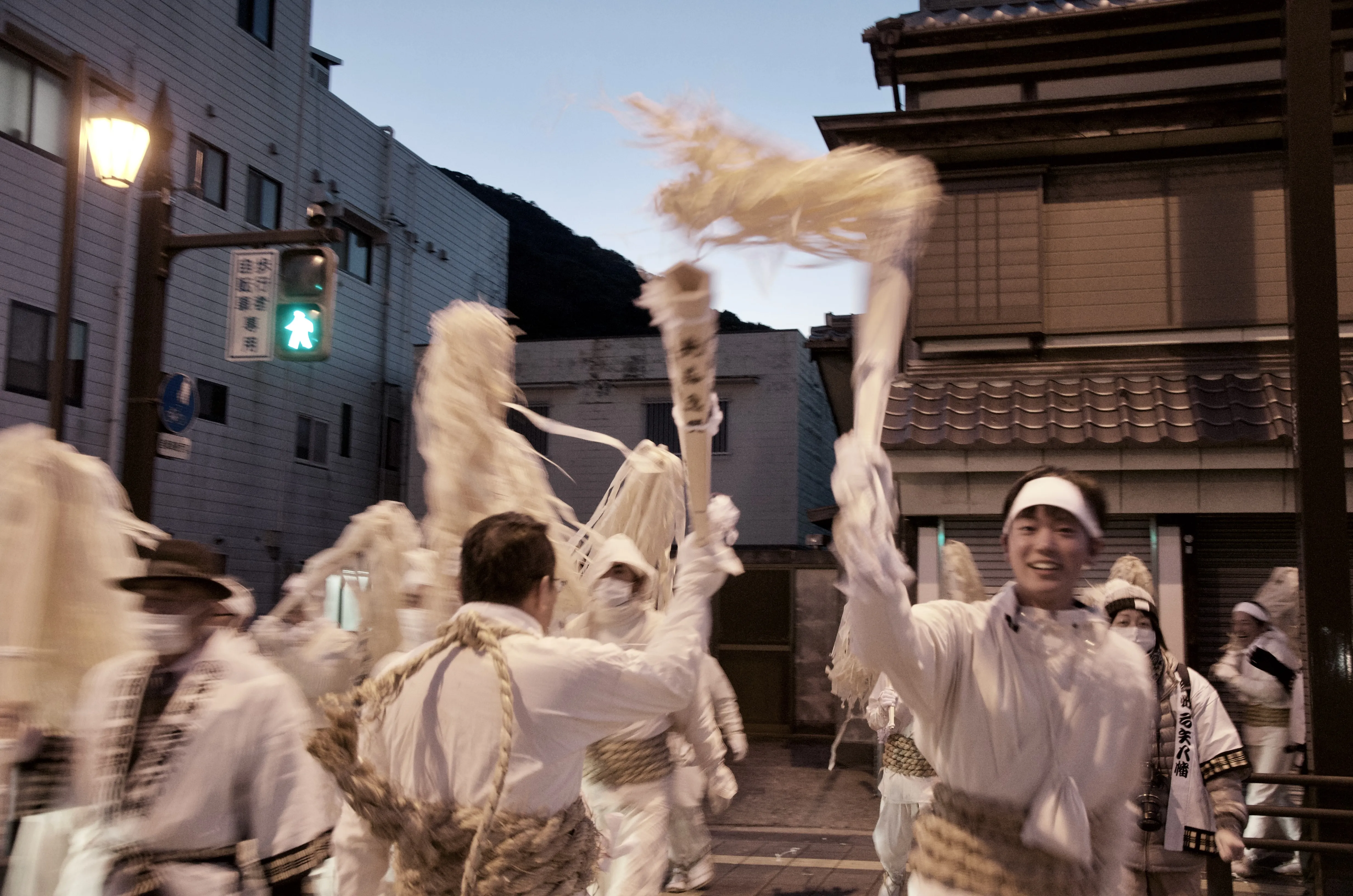
My other two accoutrements are a pair of straw shoes (waraji) and a pentagonal torch (taimatsu) with paper-like tassels streaming out from the top. Before the festival I was asked to come up with four wishes for the upcoming year, to be written on it in Japanese kanji and sent skyward by the burning torch. But my translators did not care for my choice of wishes, so they exercised some editorial control (and didn't tell me).
The festival has been held for hundreds of years, but it has lost much of its significance as a purification ritual. Most people, including me, skip the morning bath in the ice-cold river. It's hard to argue that the tuna sashimi at lunch counts as white food. And other forms of asceticism are no longer practiced for an entire month, if even on the day of the event.
As the sun begins to set, my group steps out onto the street and begins our pilgrimage to the mountain. Our route takes us to different shrines along the way to pray, and whenever we cross paths with fellow noboriko, we strike our unlit torches together and shout "Tanomude!"
Occasionally, Sawahara-san abruptly turns our group down some side street, where we find ourselves in someone's backyard or living room being served white snacks and hot amazake to warm us up. It makes us feel like heroes instead of knuckleheads embarking on an objectively ill-considered stunt.
When we arrive at the foot of the mountain, it has gotten dark. Giuliana, our photographer, has to leave the group to join the other women in the audience as boys and men cross over a small, red bridge, pass under the lower torii gate, and start to ascend the steep staircase.
I'm told there are 538 stone steps leading up to the Kamikura shrine. The first half is steeper and very uneven. As I start my climb, I can't help but look up at the crowd above me, which seems like a tower of twenty men standing on each other's shoulders disappearing into the trees. Thankfully, it is a slow and uneventful, if demanding, ascent.
While most of the crowd continues up to the top, Sawahara-san and I stop at the middle landing, a wide, level clearing with another minor shrine. He rips the tassels off of my torch and adds them to a big pile that has been gathered here, and gestures for me to sit off to the side and wait. The area where we're waiting seems to be a popular spot for men who have spent the evening drinking sake to relieve themselves.
After a long rest, the gathering suddenly turns its attention towards the steps, and I see man running down carrying a lit torch. He tosses it into the pile of tassels. We ignite our own torches from the bonfire, and start up the next flight of stairs.
This ascent is my favorite part of the night. There are only a few of us who go ahead, and it feels solemn as we march in the torchlight towards the indistinct hum of the crowd waiting by the upper gate. It seems like we are at the wreckage of a recent plane crash, with little strips of torch tassels smoldering in all directions, and we pass by the occasional trampled waraji that hadn't been tied on properly.
I can't see it in the dark, but I pass by an old, tall tree off to the left side of the staircase. It stands straight up, its trunk spiraling around in a helix. I've been told, but I doubt, that this is the only such tree on the mountain, and that it holds spiritual significance, representing a dragon that guards the shrine.
The top of the staircase is thick with smoke that stings my eyes, and beyond twenty feet ahead of me all I can see are hundreds of indistinct flames floating at the ends of invisible torches. It is estimated that I am among about 1,800 noboriko this year, and even young children carried in their fathers' arms are up here in the smoke. Sawahara-san, probably thinking I'm going to hurt myself or someone else, extinguishes my torch.
At around 8 PM, the upper gate bursts open and one-to-three-rope-loopers, who have been taking swings at one another for the past few hours jockeying for the best spot, race down the steps. I'm told some of the fastest can do it in 2 minutes, which as far as I am concerned simply means they are suicidal.
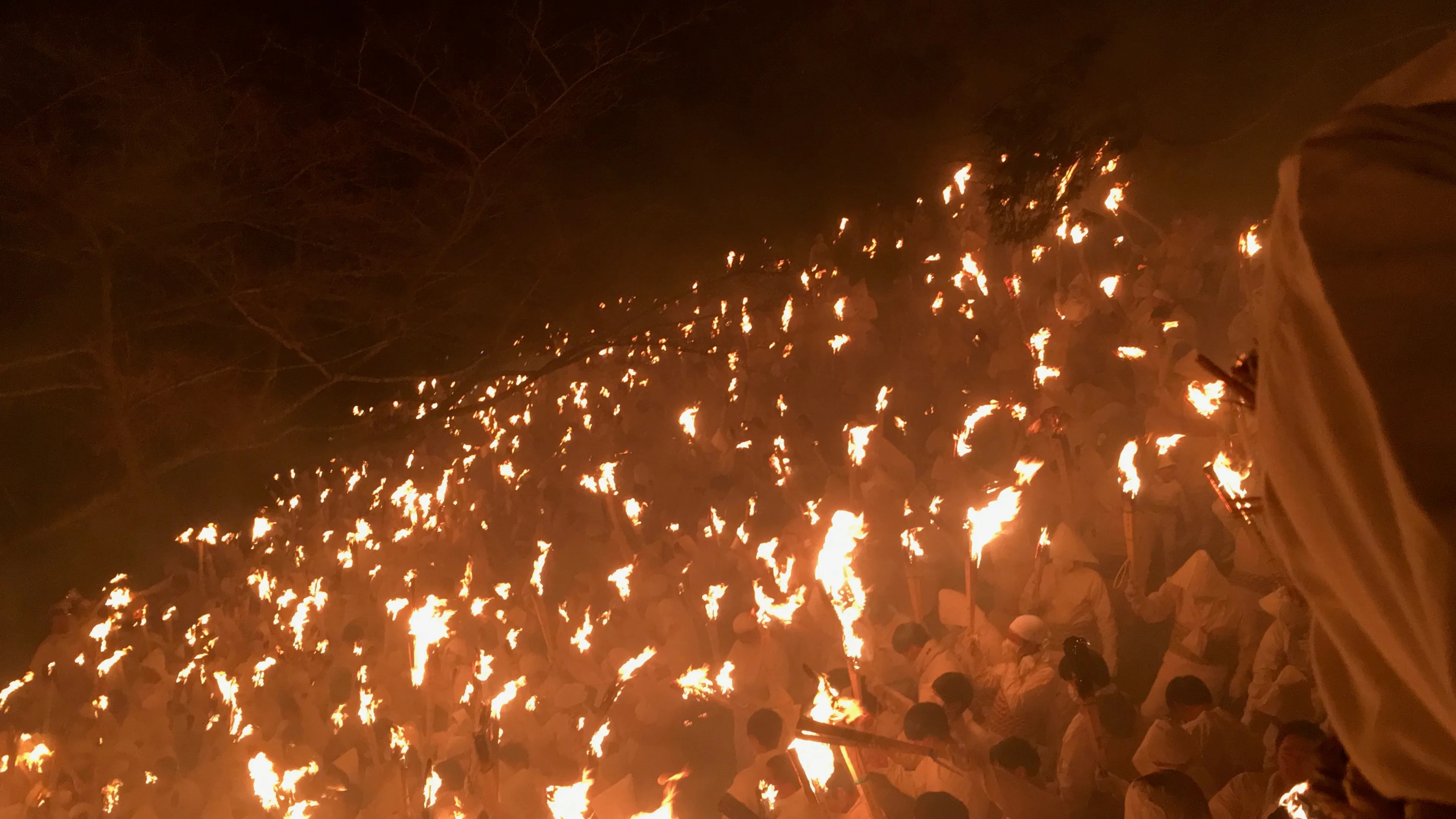
Following them, the entire crowd of men starts to filter down the stairs. I lose Sawahara-san instantly. The crowd picks up a cadence call of "Wasshoi! Wasshoi!" (The Internet says this means "stay with harmony.") To the audience below, it is supposed to look like a fiery dragon rushing down towards them.
It takes me about 30 minutes to descend back to the lower gate, but thankfully in the dark it is harder to get vertigo. I only need to crouch down to stabilize myself a few times, and the crowd isn't pushing. On the way down, I stop at the landing to re-ignite my torch; I'm not going to miss out on that part of the experience even if it means I catch my shirt on fire.
At last, I reach the bottom of the steps, and pass through the lower gate, and across the bridge which connects the shrine, belonging to the spiritual realm, with the secular world. I know I haven't really achieved anything, but it still feels triumphant to join the procession past the spectators.